
Buying Guides
Product Sourcing from China: The Complete Step-by-Step Workflow
The seven-stage workflow behind every China sourcing order - what happens at each stage, what you decide, and what your agent runs while you decide it.
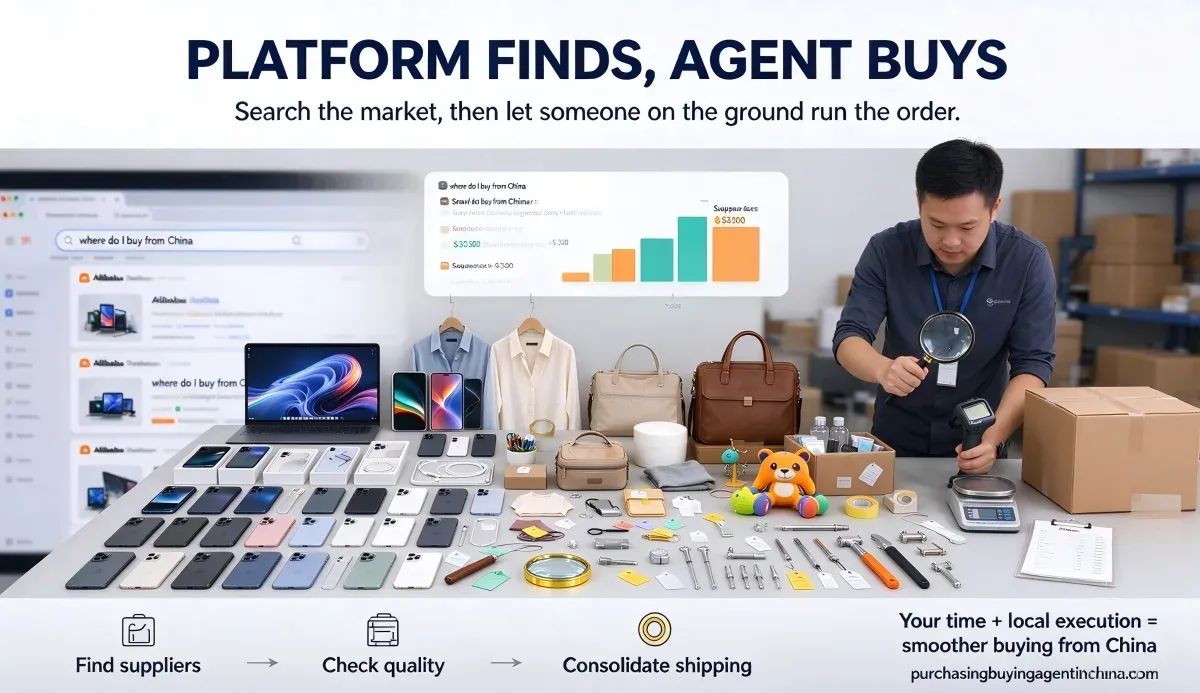
The second order always runs smoother than the first - not luck, just the workflow you built from the first one. If you are building that routine for your business, here is its complete shape: seven stages, what happens in each, and where your decisions sit versus the work your agent runs.
Stage one: define the order
Product, specification, target quantity, destination, and the number that matters - the price at which this works for your market. Everything downstream keys off this stage, and the spec you write here is the standard every later stage judges against. Decide it once, write it down, stop renegotiating with yourself.
Stage two: shortlist the suppliers
Platform search, market knowledge, and an agent's network all feed the same output: three to five candidate suppliers worth sampling, not fifty worth scrolling. The screening at this stage saves every stage after it - which candidates actually manufacture, who answers like a business, who is willing to make a sample at all.
How to Find Chinese Suppliers You Can TrustStage three: quotations and samples
Quotations requested at your real quantity - not the listing's minimum - and compared on the same terms. Samples collected from the shortlist, sent together, judged in your hands against the spec from stage one. This is the cheapest decision point in the entire workflow: a few samples decide where the real money goes.
Stage four: place the order on written terms
The chosen supplier, the confirmed specification, quantities, packing, dates - and the trade term that decides who arranges what. The order should exist in writing before any money moves, in enough detail that a disagreement has something to be settled against.
Stage five: run the production
Orders are promises until someone watches. Follow-up means chasing dates, catching drift between what was agreed and what is being made, and raising problems while the supplier can still fix them cheaply. This is the stage most often skipped by solo buyers and most reliably run by agents - it is unglamorous, daily, and in the local language.
Stage six: check before the goods leave
Goods arrive at the warehouse; the check runs against your approved sample: colors, finish, counts, packing. Photos and videos of the actual cartons - the evidence you look at, not a summary you are told about. Problems caught here are a conversation with the supplier; problems caught at your door are a write-off.
Our Inspection, Warehouse Consolidation and Shipping ServiceStage seven: ship, receive, review
Consolidated orders move as one shipment to your door - booked on your own forwarder or on one your agent works with, your call. Then the stage most buyers skip: review the order against the spec - what sold, what held, and whether this supplier earned the next order. The review is what turns one order into a supplier relationship, and a relationship into a shorter workflow next time, because stages two and three already have their answer.
How a Buying Agent Works: From Your Product List to DeliveryWhere your decisions sit
Seven stages, and you decide three things: the specification, the sample, and the supplier. Your agent runs the other work - the shortlist legwork, the quotations, the follow-up, the warehouse check, the consolidation and shipping hand-off. That division is the whole appeal of sourcing with a desk in China: you keep the judgment calls, someone else keeps the phone ringing in Mandarin.
If you are brand new to all of this, start with the beginner roadmap - same journey, first-order view:
How to Buy Wholesale from China: A Beginner's RoadmapSend us your spec and run stage two through seven with us