
Buying Guides
Shipping from China to Your Door: A Freight Forwarder's Guide
Sea, air, or express? A freight forwarder on how small businesses ship from China — consolidation, customs, volumetric weight, and picking the right mode.
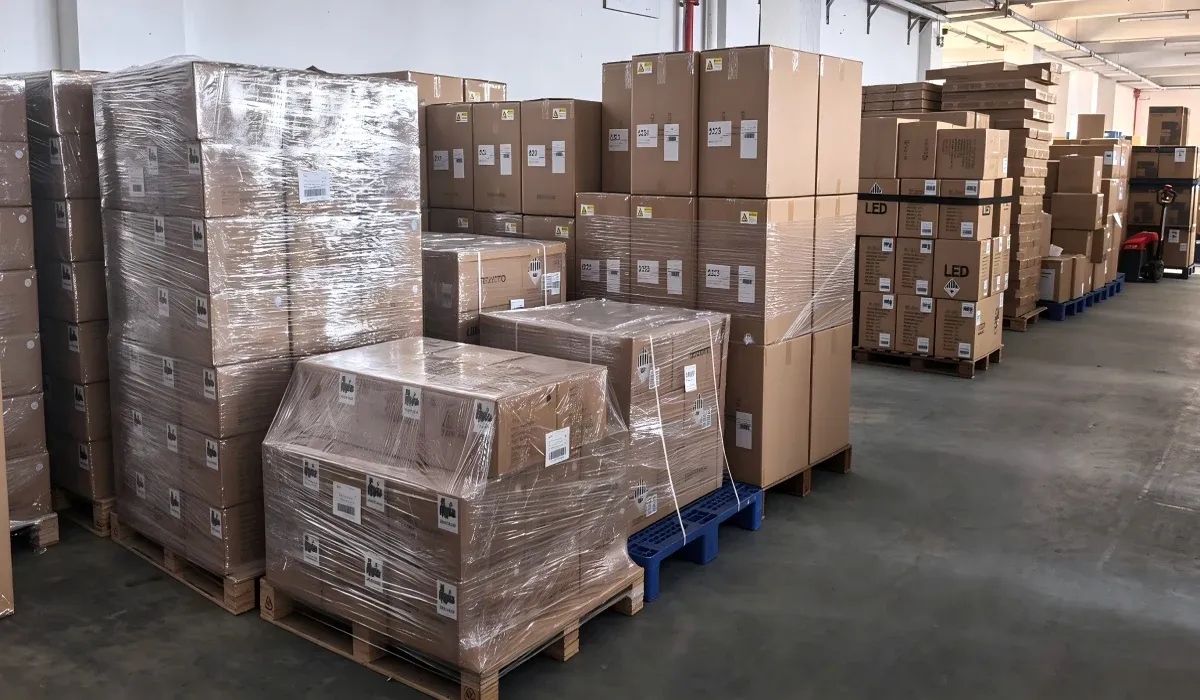
You have placed the order, the factory has finished production, and your goods are sitting in a warehouse in Shenzhen. Now comes the part that scares most first-time importers: how do I actually get this stuff to my door?
As a freight forwarder working alongside a China-based purchasing agent, I see the same questions every day. Which shipping method should I choose? Why is my 30 kg shipment billed at 45 kg? Do I need a customs broker? Will my goods arrive before Christmas?
This guide answers all of them. No jargon, no sales spin — just how shipping from China really works, whether you are sourcing a few cartons or filling containers.
The Three Ways Your Goods Leave China
Almost every shipment from China to overseas buyers moves by one of three methods. Each has a distinct cost, speed, and weight profile.
Method | Typical Transit Time | Best For | Cost (per kg, indicative) | Min. Weight |
Express courier (DHL, FedEx, UPS) | 3–7 days | Samples, small parcels, urgent restocks | 6–12/kg | None |
Air freight (airport-to-airport + last mile) | 5–10 days | 20–100 kg, medium-urgent orders | 4–8/kg | ~21 kg |
Sea freight (LCL or FCL) | 20–45 days | Bulk orders, heavy/bulky goods | 0.50–3/kg (LCL) | ~50–100 kg (LCL) |
A few things this table does not tell you:
- Express is door-to-door and includes customs clearance in most cases — you pay one number and the box arrives. Simplest, but the most expensive per kilo.
- Air freight is cheaper than express above ~21 kg, but it is airport-to-airport. Someone still has to clear customs and deliver the last mile in your country. A good forwarder handles that for you.
- Sea freight is by far the cheapest per kilo, but the slowest. For LCL (less-than-container-load), your goods share a container with other importers' goods — you pay for the space you use.
How to Choose: A Forwarder's Decision Tree
Picking a shipping method is not about what is "best" overall. It is about matching weight, urgency, and budget for this specific shipment.
Choose express courier if:
- Your shipment is under 20 kg
- You need it in under a week (a sample for a trade show, a restock before a sale)
- The goods are high-value but low-weight (electronics, jewelry, small accessories)
Choose air freight if:
- Your shipment is 21–100 kg
- You can wait a week to ten days
- You are shipping medium-value goods where sea freight is too slow but express is too pricey
Choose sea freight (LCL) if:
- Your shipment is over 100 kg or bulky (large cartons, furniture, seasonal stock ordered early)
- You planned ahead and can wait 3–6 weeks
- You are shipping low-value-per-kg goods (packaging, toys, basic apparel) where freight cost matters to your margin
Rule of thumb: If the freight cost exceeds 15–20% of the goods' value, you are probably on the wrong method. A 5 kg box of phone cases at3 each should not cost40 to ship — move it by air or consolidate it with other orders.
The Volumetric Weight Trap
This is the single most common surprise for new importers. You are not always charged on actual weight. You are charged on whichever is greater: actual weight or volumetric (dimensional) weight.
Why? Because a large, light box takes up space on a plane or ship that could hold heavier, denser cargo. Carriers charge for the space, not just the kilos.
Volumetric weight formulas:
- Express & air freight:
Length (cm) × Width × Height ÷ 5000 = volumetric kg
- Sea freight (LCL):
Length (cm) × Width × Height ÷ 6000 = volumetric kg(or charged per CBM, depending on the forwarder)
Example: A carton of plush toys measures 60×40×40 cm and weighs 8 kg actual.
- Volumetric weight:
60×40×40 ÷ 5000 = 19.2 kg
- You are billed at 19.2 kg, not 8 kg.
This is why "light but bulky" goods — stuffed toys, empty packaging boxes, inflatable items, large apparel — often cost more to ship than you expect. A forwarder who consolidates and repacks your goods tightly can cut volumetric weight significantly, sometimes by 30–40%.
What a Freight Forwarder Actually Does for You
Many importers assume a forwarder just books a truck and prints a label. In practice, the forwarder is your logistics project manager from the moment goods leave the supplier to the moment they reach your warehouse.
Task | What it means | Why it matters |
Cargo consolidation | Combining goods from multiple suppliers into one shipment | Fewer shipments = lower per-kg cost and fewer customs entries |
Repacking & measurement | Re-measuring, re-packing, removing excess packaging | Reduces volumetric weight and protects goods |
Booking space | Securing slots on flights or vessels, especially during peak season | Guarantees your goods move on schedule |
Export customs clearance | Filing China export declarations | Legally required; errors delay the shipment |
Freight insurance | Arranging all-risk coverage for the goods | Protects against loss or damage in transit |
Document handling | Bill of lading, commercial invoice, packing list, certificates | Required for import clearance and payment terms |
Destination customs & last mile | Coordinating a broker and delivery in your country | Completes door-to-door delivery |
Tracking & exceptions | Monitoring the shipment and resolving delays | You are not left guessing where your cargo is |
When you buy through a sourcing agent with an in-house forwarding desk — like 6688 Buying & Purchasing — these tasks are bundled with your purchase, so you do not have to juggle a separate forwarder, broker, and warehouse.
Consolidation: The Simplest Way to Cut Freight Cost
If there is one piece of advice I would give every importer, it is this: stop shipping every supplier's order separately.
Imagine you placed three orders on 1688 — one for apparel, one for toys, one for packaging. Each supplier ships to your forwarder's warehouse individually. That is three domestic parcels, three chances for volumetric waste, and three international shipments.
A consolidating forwarder receives all three at their warehouse, re-packs them into one export carton, and ships once. You pay:
- One international freight charge (not three)
- One set of customs documents (not three)
- One destination handling fee (not three)
For orders that would otherwise ship separately, consolidation often cuts total shipping cost by 30–50% — the difference between a profitable shipment and one that eats your margin.
Customs: What You Need to Know on Your End
Even with a forwarder handling China-side export, you (the importer) are responsible for import compliance in your country. Key points:
- HS code & duty rate: Every product has a Harmonized System code that determines import duty and tax. Your forwarder or broker can classify your goods, but you should know the rate before you price your products.
- VAT/GST: Many countries charge import VAT or GST on top of duty (EU VAT, UK VAT, Australia GST, US sales tax handled differently).
- Restricted goods: Some categories — batteries, lithium cells, certain cosmetics, branded goods — require extra documents or are prohibited by certain carriers. Declare them honestly; misdeclaration causes seizures and fines.
- Low-value thresholds: Some countries have duty-free thresholds (e.g., US de minimis, EU €150). Shipments below these may skip duty, but rules change frequently — check current rules, do not rely on old advice.
A competent forwarder will ask you about your destination, classify your goods, and quote you a landed cost estimate (goods + freight + duty + tax) before you commit.
Peak Season: Plan or Pay
China's shipping calendar has two rhythms you must respect:
- Pre-Chinese New Year rush (January): Factories and carriers run at capacity. Space tightens, rates rise 20–60%. Book 3–4 weeks early.
- Pre-Christmas export window (August–October): Retailers worldwide stock up for the holiday season. For Christmas and festive goods especially, the September–October shipping window is non-negotiable — miss it and you face peak rates, delays, and stockouts.
Off-season (roughly February–July for non-seasonal goods), rates are lower and capacity is loose. If your products are not season-bound, buying and shipping in the off-season can cut landed cost by 10–20%.
7 Practical Tips from a Forwarder
- Ask for the packing list before quoting. Actual dimensions and weight per carton are the only honest basis for a freight quote. Estimates lead to surprises.
- Measure before you complain. If your bill is higher than expected, re-measure the cartons. Carriers measure at their terminal — their number is usually the one that stands.
- Consolidate, always. Unless an order is time-critical, hold it for a week and ship it with your other orders.
- Insure valuable shipments. All-risk insurance costs 0.3–0.5% of goods value. Skipping it to save
20 on a3,000 shipment is false economy.
- Know your incoterms. "FOB" means the supplier delivers to the origin port — you handle the rest. "DAP" or "DDP" means the forwarder delivers to your door. Mismatch causes cost disputes. For a full breakdown of EXW, FOB, CIF and DDP, see our Incoterms Explained guide.
- Avoid branded goods without authorization. Customs in most countries seize unlicensed branded products. Your forwarder cannot save a shipment that is legally non-compliant.
- Track, but do not panic. A 24–48 hour status silence during transit is normal, especially at transshipment hubs. Your forwarder will flag real exceptions.
How 6688 Handles Your Shipping
When you source through 6688 Buying & Purchasing, based in Shenzhen, shipping is not a separate transaction bolted onto your order — it is part of the service.
We receive your goods from 1688, Taobao, factories, and wholesale markets, inspect them in our warehouse, consolidate them into efficient export cartons, and offer sea, air, and express options based on your weight, budget, and deadline. We handle China-side export clearance, arrange freight insurance on request, and coordinate destination customs and last-mile delivery in most countries.
Transparent 5–10% commission on goods, shipping passed through at cost, no minimum order. If you want to see what we can source and ship, browse the products we handle — from apparel and electronics to toys, pet supplies, packaging, and seasonal goods.
Ready to plan a shipment? Contact us with your product list, destination country, and target deadline. We reply to new inquiries within one working day with a landed-cost estimate.