
Buying Guides
What Is an Import Sourcing Agent? (And Who Actually Needs One)
An import sourcing agent buys from Chinese suppliers on your behalf and follows the order through to shipping. What one does, who needs one, and when you don't.
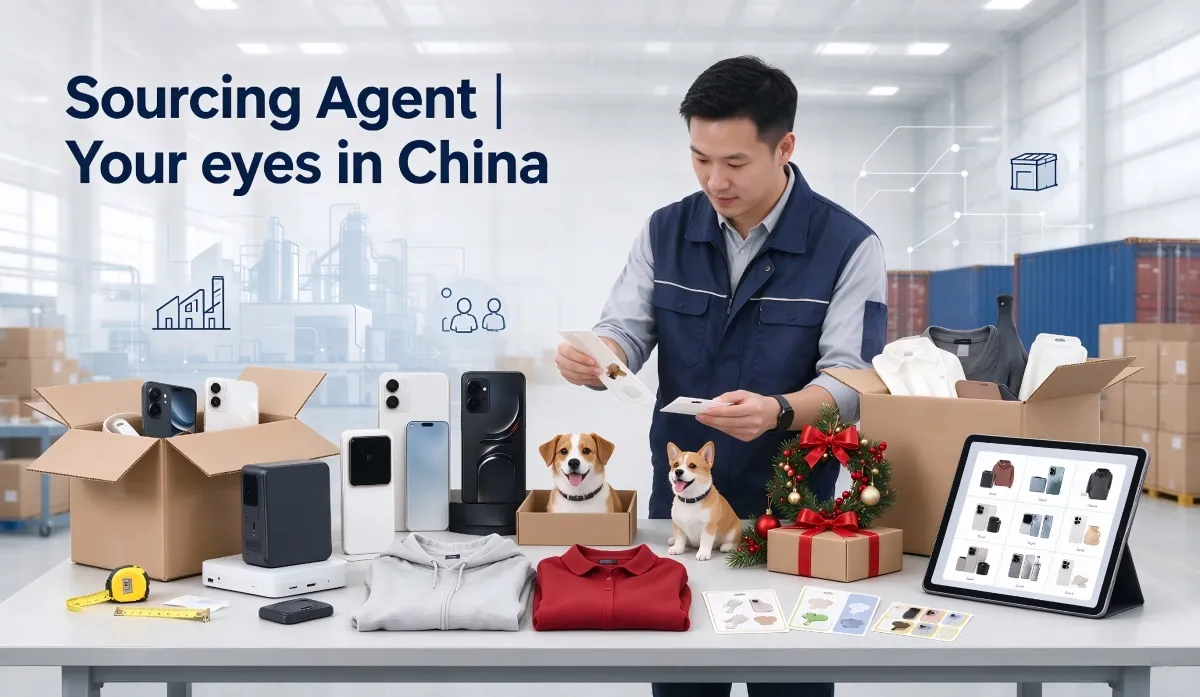
You found the product. A factory in China makes it, the photos look right, and the price is a fraction of what your local wholesaler charges. Then the questions start: who is this supplier, really? What happens if the goods arrive nothing like the photos? And who do you call on a Tuesday afternoon when the factory stops replying?
An import sourcing agent exists to close exactly that gap. It is a person or company based in China that buys on your behalf: it finds the factories, negotiates in the local language, places and follows the order, checks the goods before they leave, and hands the shipment to a freight forwarder so it reaches your door. You deal with one party, in your language and time zone; the agent deals with everything on the Chinese side.
What an import sourcing agent actually is
Three roles get mixed up in this industry, so it helps to separate them. The supplier manufactures the product. The freight forwarder moves it across the ocean. The sourcing agent is the buyer standing between the two, acting on your instructions - paid to represent your interests at the factory, not to sell you its own stock.
The word "import" matters. Anyone can forward a parcel; an import sourcing agent works on the buying side of your import business, the part that happens before anything ships. That is where most money is lost: wrong suppliers, weak prices, quiet shortcuts in production. The agent's job is to catch those problems in the factory and the warehouse, not in your receiving bay.
What one does day to day
The work has two halves: winning the order, and living with it.
Before you commit, the agent shortlists factories that genuinely make your product, checks them out, requests quotations in Chinese, and pushes on price the way a local buyer would. Samples from two or three candidates get collected at one address, reviewed, and sent to you together, so you compare real goods instead of photographs. If a supplier looks good on screen but behaves badly off screen, the agent is the one who finds out - before your money moves.
Once the order is placed, the agent follows production and keeps the factory to the agreed dates. When the goods reach the warehouse, they get checked against the sample: for many buyers that means photos and videos of the actual cartons, not a supplier's best shots. Orders from several factories are consolidated into one shipment and handed to a freight forwarder - yours, or the agent's partner - with your delivery address on it. From there the goods move, and the tracking comes to you.
Who actually needs one
Agents are not for everyone. Five kinds of buyers get the most out of one.
New importers. If you have never bought from China, the supplier side is the hard part, not the shipping. An agent gives you a buying department on day one: local prices, local negotiation, and someone who judges a factory from its workshop floor instead of its website.
Small wholesalers buying from several factories at once. Five suppliers means five negotiations, five sets of samples and five separate deliveries. An agent merges all of it into one order, one inspection and one shipment.
Online sellers testing a product. With a small batch, factories offer their worst terms and give your order the least attention. An agent keeps small orders moving on small-order terms, and tells you honestly when the numbers stop making sense.
Small-Quantity Orders from China: How MOQ Works for Overseas BuyersBuyers with no presence in China. Time zones, language and distance let small problems grow quietly. A local agent is your eyes in the market, in the workshop and at the warehouse when your goods arrive.
Businesses stepping outside their usual category. Even experienced importers lean on an agent here: in a product family you do not know, you do not know which factories are real, what a fair quote looks like, or which questions to ask - and finding out by trial and error is expensive.
If you have decided you need one but not yet picked one, we wrote a separate guide on choosing well:
Why Small Businesses Need a China Sourcing Agent, and How to Choose the Right OneWhen you genuinely do not need one
A good agent will sometimes tell you not to hire one - this is that part of the article. If you already buy directly from one factory you know well, visit it yourself or have someone who does, and you have a forwarder you trust, an agent adds a layer you may not need. Agents earn their keep where there are several suppliers, a language gap, small orders factories deprioritize, or no one on the ground. If none of that describes your situation, buy direct and keep the margin.
How it works with us
We are a buying agent based in Shenzhen, near China's manufacturing belt. Send us a product link, a photo or a list with quantities, and we reply within 24 hours. If the quotation that follows looks right, we arrange samples, place and follow the order, photograph and video the goods when they reach our warehouse, consolidate everything into one shipment, and ship it with your forwarder or ours - to your door.
For deeper vetting before you commit, we also carry out factory audits on request.
The full journey, step by step from your product list to delivery, is here:
How a Buying Agent Works: From Your Product List to DeliveryWhat it costs
Buying agents charge in one of two ways: a flat service fee per order, or a commission calculated on the value of the goods you buy. Which model suits you depends on the size of the order, how many suppliers are involved, and how much of the work you want handled - sourcing only, or sourcing through to shipping. Whichever way, the quotation should come first, in writing, with the scope it covers; then you decide.
Send us your product list for a sourcing quoteIf any of the five buyer types above sounds like you, the cheapest way to test the fit is with one real product. Send the link or the specification, and you will get the same answer we give small wholesalers every day: which factory we would approach, and how the order would run, from quotation to shipment.