
Buying Guides
Bags and Luggage from China: Where the Factories Are and What They Ask
Handbags, backpacks and trolley luggage from Chinese factory clusters: how the regions differ, why zips and hardware decide returns, and how an agent runs a bag order.
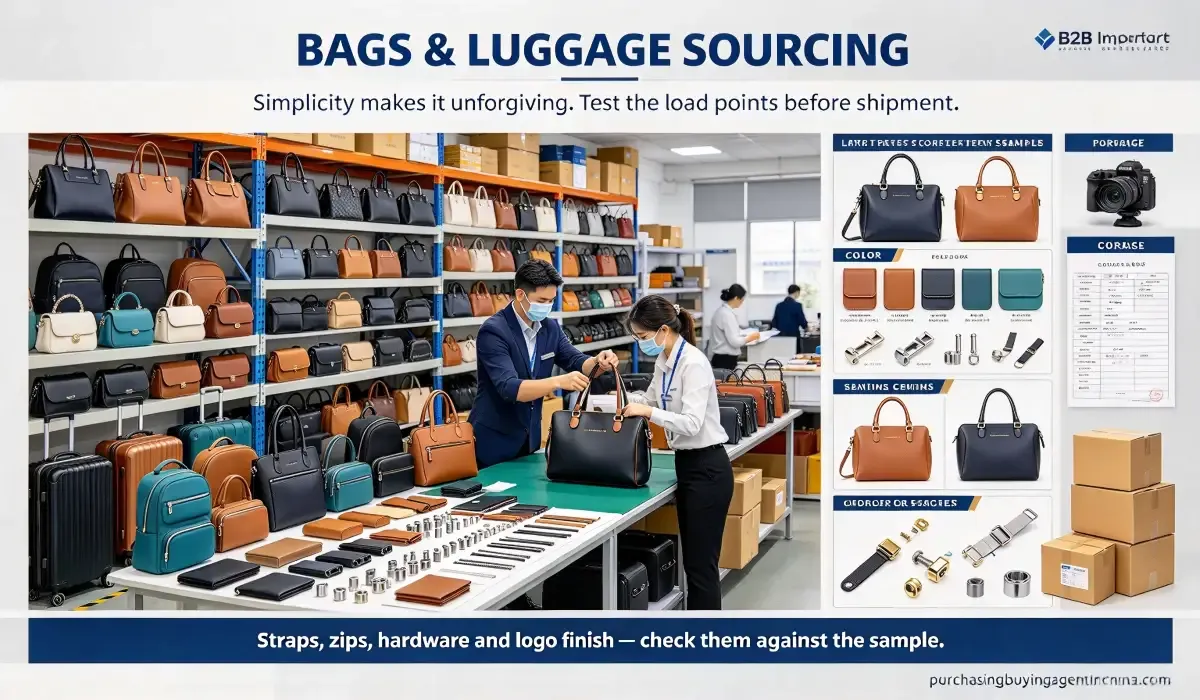
Bags are a category buyers underestimate right up to the first returns report. A bag looks simple - material, zipper, strap, stitching - and it is exactly that simplicity that makes it unforgiving: there is nowhere to hide a flaw. The handle that tears on the third trip and the zip that splits in week two both trace back to decisions made before the order was placed, and both land on the seller who chose the factory.
The manufacturing map is regional. The southern belt around Guangdong builds the mid and upper range - handbags, fashion backpacks, work that needs finishing. The northern cluster in Hebei owns volume - budget luggage and simple totes at prices the coast cannot match. Zhejiang and Fujian fill in between with travel goods and school bags. Each region also has its own trading houses and market halls, which matters when an order mixes custom production with stock styles.
What the material is really telling you
Fabric is the first decision. Nylon and polyester dominate - the variables are denier and coating, and two fabrics with the same name can differ by feel, weight and how they age in the sun. PU brings the leather-look at accessible prices and asks for honest inspection of surface and smell. Real leather is a smaller, specialist stream where the tannery matters as much as the factory.
Then the hardware, which is where returns are born. Zips are the most-used moving part on the product - a poor zip dooms an otherwise perfect bag, and named-brand hardware exists for a reason. Buckles, rings and feet ask the same question: do they feel dense in the hand, or hollow. And stitching asks to be looked at where straps meet body - the load points - because that is where bags physically fail.
Where the losses hide
The recurring losses: straps that tear at the anchor point under real load. Zips that split at the seam or lose teeth. Color that drifts between the sample and the run - dye lots move. Trolley systems that rattle loose after a few trips. And the quiet one on custom orders: logo work that arrives in the wrong finish, because print, emboss and embroidery were never pinned down as a physical sample before production.
Every one of these is caught before shipping by the same routine - samples approved and kept, load tests done by hand, hardware worked back and forth on camera, and goods checked against the sample at a warehouse before they leave.
How Bulk Orders Differ from SamplesHow the buying runs with an agent
Bags and luggage are among the categories we handle for our customers. Send the list - styles, materials, or a reference bag you want matched. We shortlist factories in the region that fits your price point, gather quotations, and get samples back to you together. Logo finishes are pinned down as physical proofs before production, and when goods reach our warehouse they are checked against the sample - stitching at load points, hardware, zip action, colors, counts - before being consolidated and shipped.
Our China Wholesale Clothing and Apparel Sourcing ServiceWho this category suits
Fashion retailers building their own bag line. Corporate buyers sourcing branded gift bags. Outdoor and travel brands extending into luggage. Start with the load points - straps and zips - because customers forgive a scuffed bag long before they forgive a broken strap.
Jewelry and Accessories from China: The Yiwu Route Explained