Buying Guides
Toys and Educational Products from China: A Sourcing Guide for Wholesalers
Plastic builds, wooden sets, plush and STEM kits from Chinese factories: how the category splits, what to check by hand, and how an agent keeps a toy order consistent.
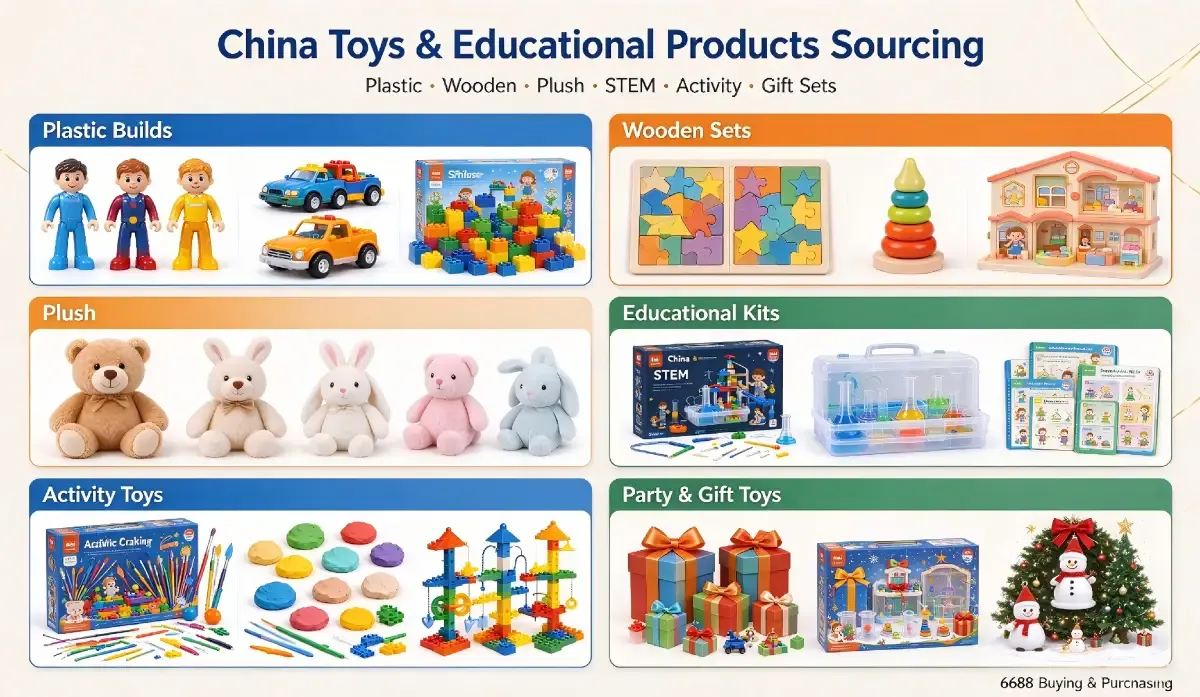
Toys are the category where the gap between a good sample and a good shipment is measured in reputation. A toy that breaks on the second day is not a return - it is a story a customer tells other customers. That is why experienced toy buyers spend their energy on two things: the physical check in the hand, and the consistency of every batch that follows it.
The category splits into clear families. Plastic builds - figures, vehicles, blocks - judged by mold finish and how parts snap together. Wooden sets - puzzles, stackers, play food - judged by sanding, paint and joints. Plush judged by fur, seams and filling. And the fast-growing educational slice - STEM kits, building sets, learning cards - judged by whether the pieces survive being used by an actual child, over and over, all afternoon.
What a sample check really covers
Hands find what photos hide. Edges and corners - a wooden puzzle that needs one more pass of sanding shows it instantly. Paint - rubbed with a thumb, checked between two units from the same box, because paint that sits proud or flakes is the classic toy complaint. Small parts - pulled, twisted, tested against what the buyer's own market expects for the age band they sell to. Moving parts - wheels spun, hinges worked, springs cycled until they complain.
None of this is a laboratory exercise. It is what a careful buyer does with a sample on a desk, and it predicts almost everything about the shipment that follows.
Where toy orders go wrong
The recurring losses follow the category's shape. A plastic set where the second production run comes out with flash marks the first did not have. A plush line where fur quality quietly drops mid-run. A wooden batch where paint shades drift from the approved sample. Educational kits that arrive with one component short in a share of boxes - the most return-generating defect in the whole category, because the set is unusable until the missing piece appears.
The counter is the same routine that protects every category, applied early: approve physical samples and keep them; require the shipment to stand next to the sample; count kit components in the warehouse, not just the boxes.
How Bulk Orders Differ from SamplesHow the buying runs with an agent
Toys and educational products are among the categories we handle for our customers. Send the list - product types, age bands you sell to, and the quantities in mind. We shortlist factories that actually make the family you want, gather quotations, and bring samples back for your judgment. When the order runs, it is followed in production, and in our warehouse every batch is checked against the approved sample - edges, paint, seams, and component counts for kits - before it ships.
Our Toys and Educational Products Purchasing ServiceWho this category suits
Toy shops and educational retailers building their own range. Gift stores adding play lines. Online sellers testing STEM and wooden sets in small runs. Whoever you are, the sequence is the same: sample in the hand, batch against the sample, and someone local watching the middle.
Send us your toy list and we will start the factory shortlist